
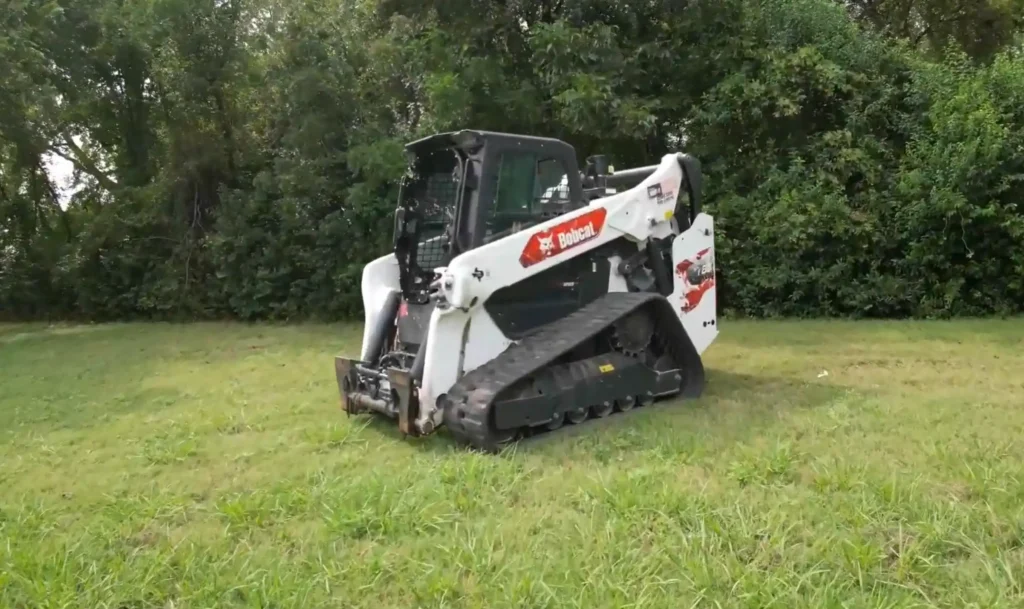
We provide heavy equipment glass in Greeley for tractors, combines, skid-steers, loaders, and other heavy equipment across Weld County, on-site at your farm, ranch, or job site. Equipment glass is flat cab glass, sized and cut for the machine, and the machine can’t come to us. So we bring it to the field. Same honest pricing and a real person on the phone.
Weld County is farm and ranch country, and farm equipment lives on the roughest ground there is. A rock off a field, a branch in a fence line, or a flying stone from the next implement over, and suddenly a cab window is gone. We replace glass on tractors, combines, skid-steers, and heavy equipment right where the machine sits, because a combine in the middle of harvest can’t exactly drive to town.
Equipment glass is flat glass, cut to fit
Farm and construction equipment doesn’t use curved automotive windshields. Cab glass is flat, and it’s cut and shaped for the specific machine: a front windshield, door glass, rear and side windows, curved corner panels on some cabs. We source or cut the right glass for your tractor, combine, or loader and set it in the cab properly, sealed against dust and weather so the cab stays a cab. Tell us the machine make and model and what glass is broken.
We come to the farm or job site
You’re not driving a tractor or a skid-steer across the county to a shop, and a combine mid-season isn’t going anywhere near town. We do equipment glass on-site: your farm, your ranch, the field, or the job site, anywhere in Weld County. That’s the only way this work makes sense, and it’s how we’re set up to do it.
Harvest and planting do not wait
When you’re in the field during planting or harvest, a broken cab window isn’t a someday fix, it’s dust and weather in your face for a twelve-hour day, and on some machines it’s a safety and visibility problem. We move on ag glass around your season, because we know equipment down during harvest costs more than the glass ever will. If you run a spread of equipment, our fleet and commercial glass service can set you up with account billing.
What kinds of equipment?
Tractors, combines, swathers, sprayers, skid-steers, wheel loaders, backhoes, excavators, and the rest of the working iron in Weld County. Cab windshields, door glass, rear windows, side panels. If it’s a machine with a cab and the glass is broken, tell us what it is and we’ll source it.
Which machines we are called out to most
Weld County runs a mix of row crop, feedlot and construction work, so the machines we see are a mix too. These are the ones that come up most often.
Farm equipment
- Tractors of every size, from utility machines up to articulated four wheel drives
- Combines and their headers, usually in the worst possible week of the year
- Self propelled sprayers, which take a lot of glass damage because of where they operate
- Swathers, balers and forage harvesters through the silage run
- Feed mixers and loaders working the feedlots and dairies
Brand does not change much about the job, because most equipment glass is cut and fitted rather than pulled off a shelf. We work on John Deere, Case IH, New Holland, Kubota, AGCO and Massey Ferguson machines routinely, along with older units where the manufacturer no longer supplies the part at all. Age is usually less of a problem than people expect.
Construction and material handling
- Excavators and mini excavators
- Skid steers and track loaders, where door glass takes the most damage
- Backhoes and wheel loaders
- Telehandlers and rough terrain forklifts
- Dozers, graders and compaction equipment
Bobcat and Caterpillar machines make up a good share of that work, though again the pattern of the glass matters more than the badge on the side.
Why equipment glass breaks differently from car glass
A windshield on a car is almost always broken by something thrown off a road. Equipment glass fails in ways that have nothing to do with highways, which is why the damage often looks unfamiliar.
- Rocks thrown by your own machine. Tillage, loader work and anything moving material sends stones upward rather than forward. Damage lands on side glass, rear windows and roof panels as often as it does on the front.
- Branches and structures. Working close to shelter belts, gates, pivots and grain legs puts glass against things a car never meets.
- Hail on parked machinery. Equipment sits outside. A combine parked through a Front Range storm takes the full hit across a lot of glass area, which is covered in the hail season checklist.
- Frame flex. Machines twist under load far more than a car body does. A chip that would sit stable in a pickup can run across a cab pane in a single day of rough ground.
- Vandalism and theft. Equipment left in open yards overnight loses glass to break-ins more often than anything else we cover.
The practical difference is that on equipment you are more likely to be replacing a side or rear pane than a front screen, and more likely to be doing several at once.
Not all cab glass is flat any more
Older cabs are almost entirely flat tempered glass, which is why cutting to pattern works so well and why we can still glaze machines the manufacturer stopped supporting years ago.
Newer cabs are a different story. A lot of current tractors and excavators use curved and bonded panes, sometimes with a laminated front screen for noise and impact, and those need the same urethane discipline as a car windshield. That means surface preparation, the correct primer, and a cure time worked out for the conditions rather than a standard hour.
So it is worth telling us the make, model and rough year when you call. It decides whether the job is a cut to pattern pane the same day or a bonded panel we need to source, and it decides how long the machine has to sit before it can work again. The cure time reasoning is the same as on a road vehicle and is explained in how long before you can drive after a replacement.
What it costs
Equipment glass depends on the machine and the pane: some cab glass is a stock size, some has to be cut or ordered for the specific model. What we commit to: we figure out the right glass for your machine, quote the full price before we start, and come to the equipment to install it. If a pane has to be ordered or cut, we’ll tell you the realistic timeline when you call.
Questions farmers and operators ask
Do you come to the field or the farm?
Yes. On-site equipment glass anywhere in Weld County: your farm, ranch, the field, or a job site. Heavy equipment can’t come to a glass shop, so we bring the work to the machine.
What equipment glass do you replace?
Tractors, combines, swathers, sprayers, skid-steers, loaders, backhoes, excavators, and similar machines. Front cab windshields, door glass, rear and side windows. Tell us the make, model, and which pane is broken.
Will I talk to a real person when I call?
Yes. Unlike national chains with automated phone bots, when you call our Greeley shop you speak directly with a local specialist who helps identify the right glass for your machine and gives you an accurate quote.
Can you match glass for an older tractor or combine?
Usually. Some cab glass is a standard shape we can cut, and some is model-specific and has to be ordered. Older machines are often easier than people expect because a lot of cab glass is flat stock. Tell us the machine and we’ll tell you honestly whether it’s a quick fix or an order.
I run a lot of equipment, can you set up an account?
Yes. Our fleet and commercial glass service handles account billing, net-30, and on-site work for operations running multiple machines and trucks.
Broken glass on your tractor, combine, or equipment? Call (970) 608-4888 with the machine make and model and which pane is broken, and we’ll source the glass and come to you.
See more vehicles we service on our auto glass by vehicle type page.
Heavy equipment glass in Greeley, cut to fit
For agricultural equipment safety and cab standards, see OSHA.
Further reading
- Harvest season and why gravel damage spikes in September. Loaded beet and silage trucks on gravel, and how far back to follow them.
- Oilfield traffic and what it does to glass. Lease roads, sand haulers and why fleets see this as a running cost.
Heavy duty pickups we also cover
- Ford F-250 and F-350 Super Duty. The largest panel we fit, and the highest value job in the county.
- Ram 2500 and 3500. Trim decides the price. What to check before you call.